
















Demystifying Payments on Account in 2026
Staring at a tax bill that’s 50% higher than you expected? You’ve likely hit the Payment on Account threshold. As we navigate the 2026 tax year—and the rollout of Making Tax Digital—understanding how HMRC "pre-collects" your tax is vital for staying cash-flow positive.
This guide breaks down the January and July deadlines, explains the "double-whammy" effect for newly self-employed pros, and explores how to safely reduce your payments if your profits have dipped. Don't let HMRC's predictions drain your business bank account; learn how to plan ahead and pay exactly what you owe.
The UK government has introduced new identity verification requirements for company directors as part of wider reforms to Companies House. These changes aim to improve transparency, reduce fraud, and ensure that individuals behind UK companies are properly identified. All directors and persons with significant control will be required to verify their identity, either directly with Companies House or through an authorised agent. Businesses should prepare early to ensure compliance and avoid disruption to their company filings.
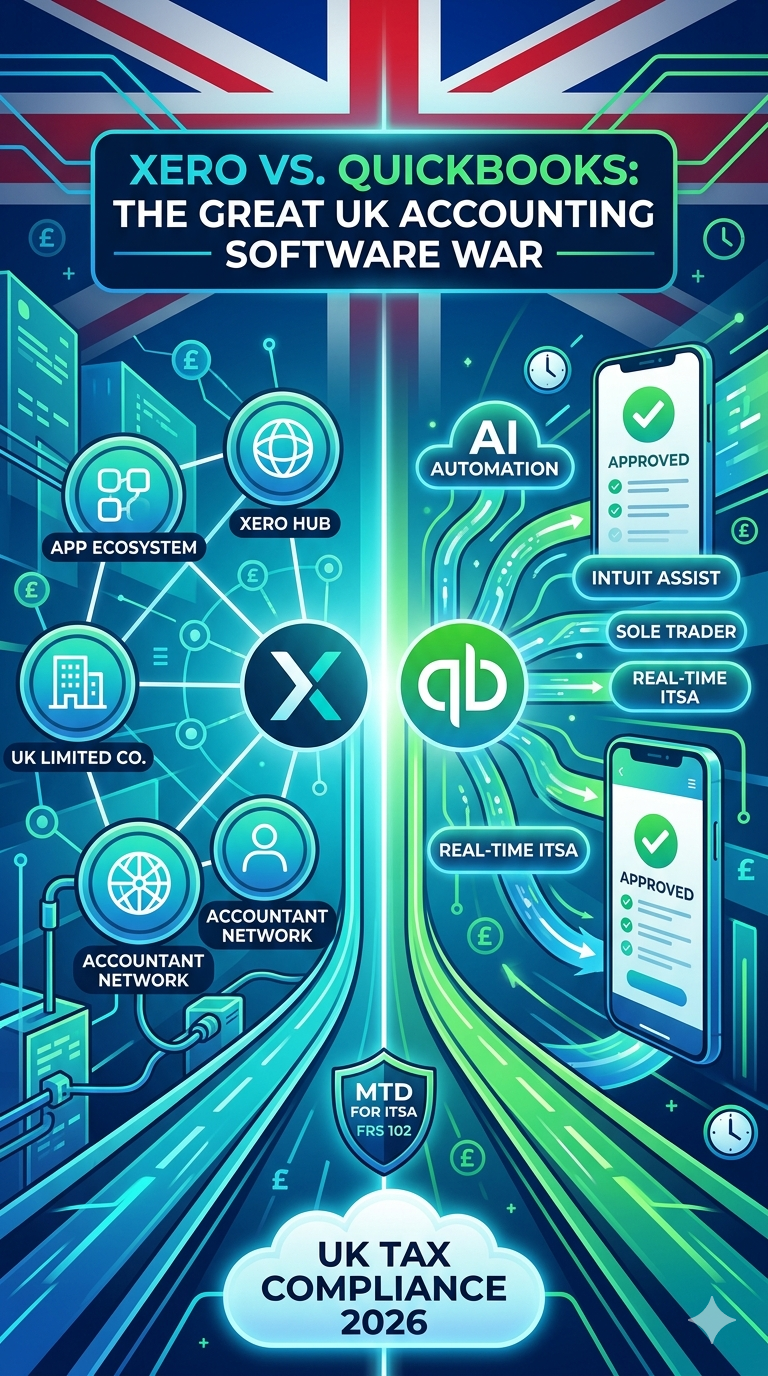
As the April 2026 tax reforms reshape the British business landscape, the rivalry between Xero and QuickBooks has evolved from a simple software choice into a strategic battle of AI versus Ecosystem. In a world where Making Tax Digital (MTD) is no longer a "future goal" but a mandatory reality for millions of UK sole traders and landlords, choosing the right platform is the difference between seamless compliance and a manual data nightmare.
This post breaks down the "2026 Accounting War," comparing Xero’s unrivaled app integration against QuickBooks’ aggressive push into AI-driven automation. Whether you’re a scaling Limited Company or a freelancer navigating the new ITSA mandates, here is how to pick your side in the fight for the future of your finance function.
Understanding the VAT threshold is crucial for any growing UK business. With the registration limit set at £90,000 in 2026, knowing when to register and how VAT works can help you stay compliant, avoid penalties, and plan your pricing effectively. Whether you are approaching the threshold or considering voluntary registration, getting it right early can make a significant difference to your business.
The latest UK Autumn Budget introduces several important updates that could affect both businesses and individuals. From corporation tax structures and National Insurance changes to the continued freeze on personal tax thresholds, these measures will influence how much tax people pay in the coming years. Understanding these updates can help you plan ahead and manage your tax position more effectively.
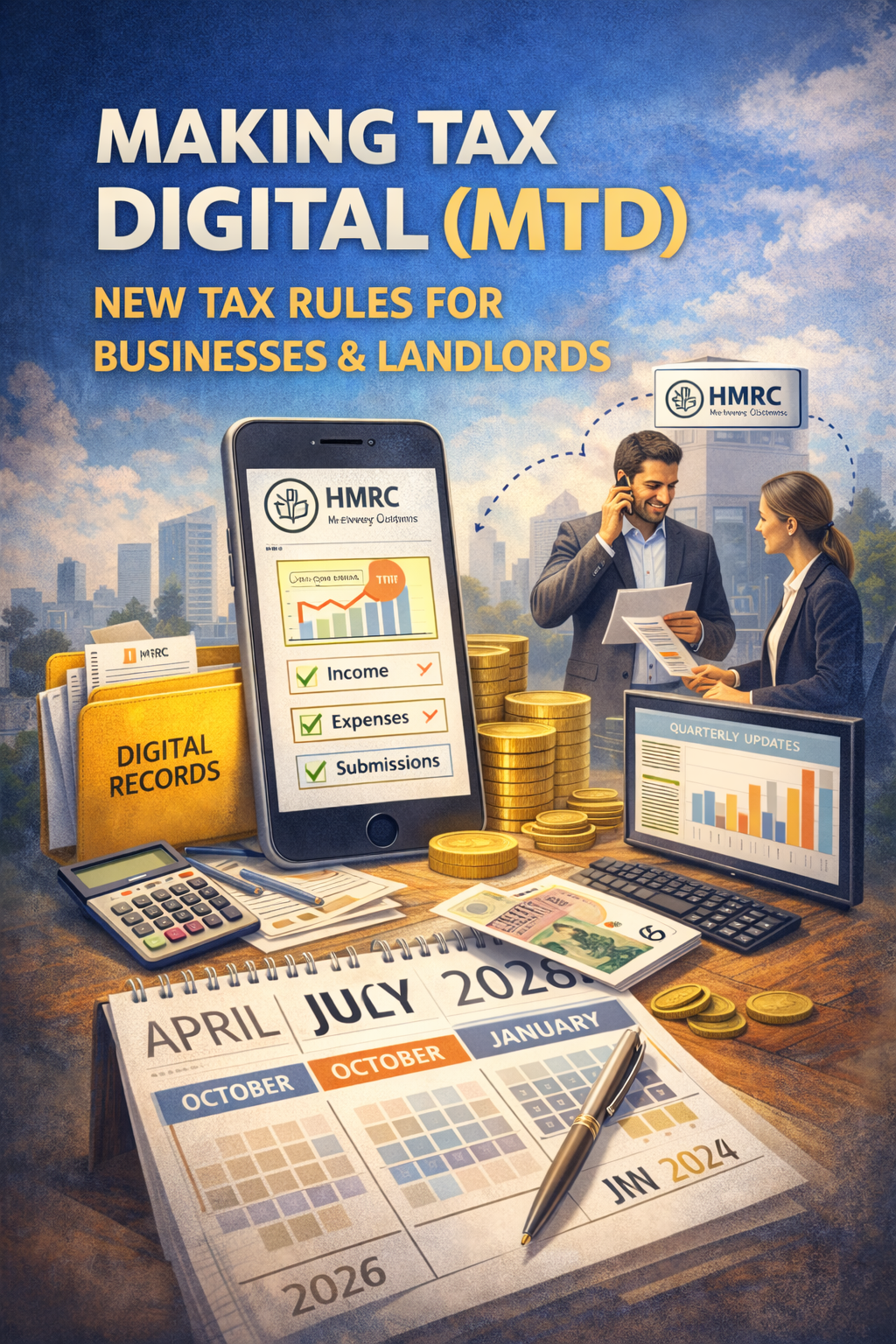
Making Tax Digital (MTD) is transforming how businesses, landlords, and self-employed individuals report their taxes in the UK. With new rules requiring digital record-keeping and quarterly updates to HMRC, taxpayers will need to move away from traditional annual Self Assessment and adopt compatible accounting software. Understanding these changes now can help you stay compliant and avoid last-minute stress as the new requirements come into force.
Setting up a Special Purpose Vehicle (SPV) limited company has become a popular way for investors to purchase and manage property in the UK. By holding property within a company, investors can benefit from corporation tax rates, full mortgage interest deductibility, and a structure that supports long-term portfolio growth. However, while an SPV can offer tax and financing advantages, it is important to understand the costs, compliance requirements, and how profits are ultimately extracted from the company.
SEIS is one of the most generous tax incentives available to UK investors backing early-stage startups. With 50% income tax relief, potential Capital Gains Tax exemption on disposal, and loss relief if things do not go to plan, it significantly reduces the financial risk of investing in young companies. For higher earners or those with recent capital gains, SEIS offers a powerful way to combine tax efficiency with high-growth investment opportunities.
Are you paying yourself in the most tax efficient way as a company director in 2026? With changes to dividend allowances, corporation tax rates and National Insurance thresholds, the right remuneration strategy is more important than ever. In this guide, we explain how to structure your salary, dividends and pension contributions to minimise tax and maximise take home income while staying fully compliant.
In this blog post, we explore why hiring a professional bookkeeper is essential for your business. Discover the signs that it's time to hire a bookkeeper, the benefits of doing so, and how to choose the right bookkeeper for your business. Learn how expert bookkeeping services at Morris Accounting can help you save time, ensure accuracy, and make informed financial decisions.
In this article, we share 6 proven strategies to improve your business credit score and increase your chances of getting approved for loans and credit lines. From paying bills on time to diversifying your credit mix, we cover everything you need to know to establish a strong credit history. Don't let a low credit score hold your business back.
Learn about the types of business expenses directors can claim to reduce their company's taxable profits and tax bills. This guide covers travel, home office, equipment and supplies, professional fees, and entertainment expenses. Keep accurate records and follow the rules to minimise your tax liability.
Morris Accounting Blog
Get business tips and tricks from our blog below
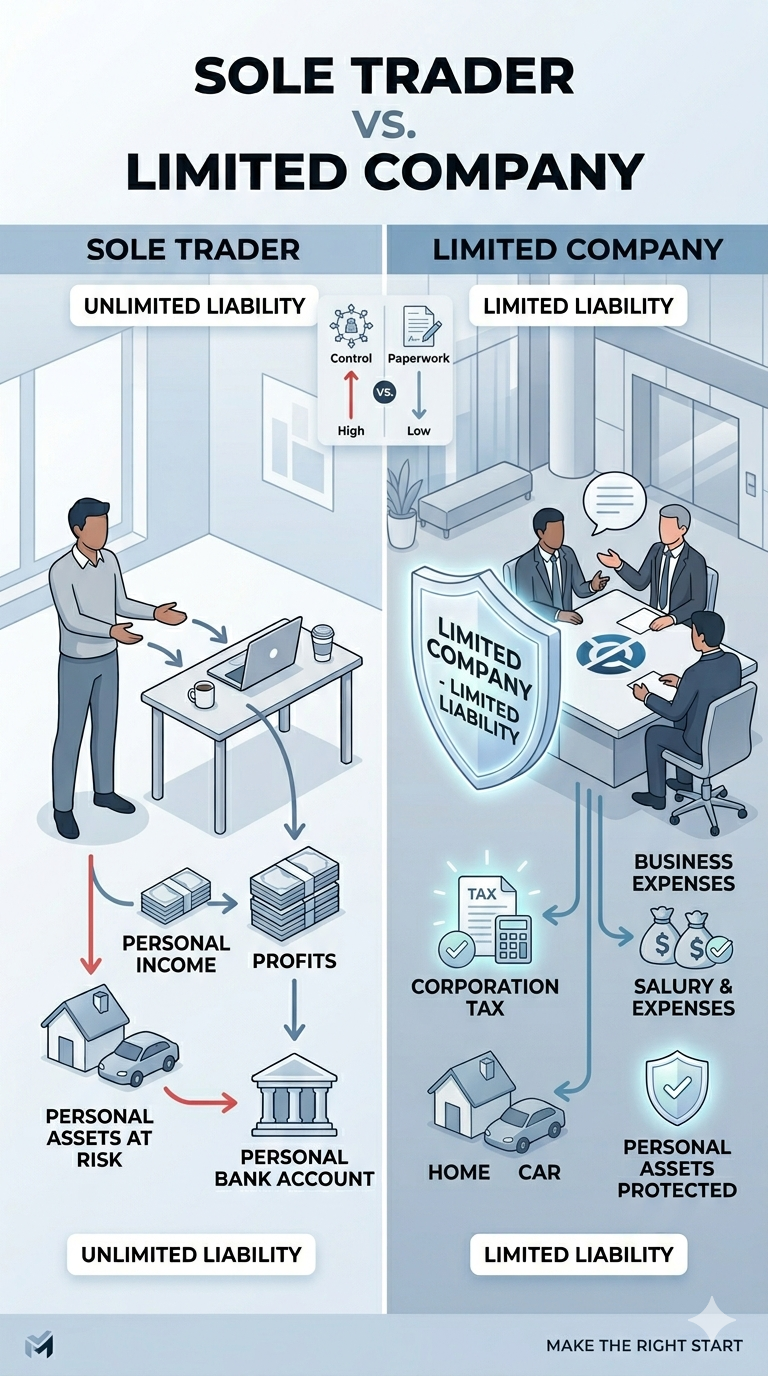
Choosing the right business structure is a foundational decision that shapes your financial future and legal protection. For many entrepreneurs, the choice boils down to two paths: the simplicity of being a Sole Trader or the robust protection of a Limited Company. While a sole trader setup offers ease of entry and full control, it carries the weight of unlimited personal liability. Conversely, a limited company provides a "corporate veil" that shields personal assets, albeit with more complex administrative requirements and public disclosure. Understanding the trade-offs between tax efficiency, risk, and administrative burden is essential for any business owner looking to build a sustainable venture.